

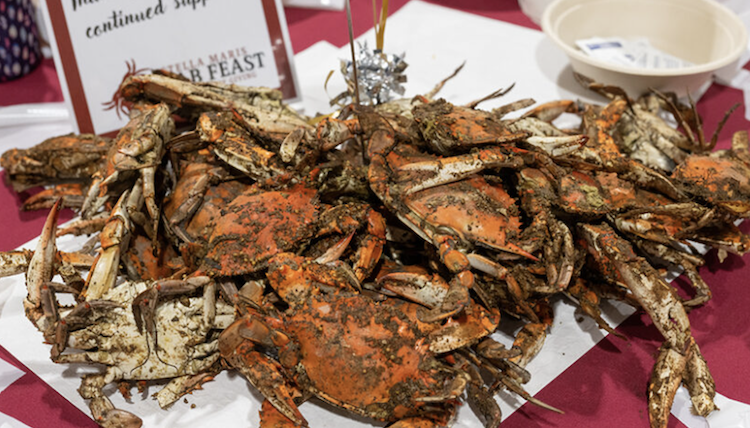
Maryland diners love to eat blue crabs, crustaceans native to the Chesapeake Bay that have been a culinary favorite in the region for centuries. But a federal effort to restrict imported crabmeat has sparked a legal fight that could disrupt supply, drive up prices and reshape the seafood industry.
The fight has also exposed a little-known fact to anyone outside of the seafood industry: Almost all “pasteurized” crabmeat purchased in grocery stores and consumed in restaurants in Maryland and beyond is imported from Indonesia, the Philippines, Vietnam, and other countries in Southeast Asia and Latin America.
Pasteurized crabmeat refers to crab that has been cooked to a specific temperature to extend its shelf life, allowing it to be shipped long distances and stored for longer periods. It’s typically sold in cans and used in products like crab cakes.
“There’s certainly nowhere near enough domestic Maryland blue crab,” to meet the large and growing demand, said Brice Phillips, an executive at Phillips Seafood, one of Maryland’s best-known seafood businesses and the company that helped popularize Maryland-style crab cakes. The company, founded in 1914, is now in its fourth generation of family ownership.
Click here to read the rest of the article written by Capital News Service over at The Daily Record